Installing Solar Panels
The information, examples, diagrams and comparisons provided are general informational content only and do not constitute engineering, structural, vehicle, solar, electrical or installation advice. Ozroofracks does not provide solar panel installation services and does not provide specific advice regarding solar panel mounting configurations, load calculations, wind ratings, electrical systems or suitability for individual vehicles or applications. Incorrect installation, overloading, inadequate bracing, poor load distribution, insufficient mounting points, excessive panel overhang, or failure to regularly inspect and maintain the system may result in damage, injury, component failure or voided warranties. Customers and installers are responsible for ensuring all products and accessories are installed correctly, safely and in accordance with applicable standards, manufacturer recommendations and intended operating conditions.
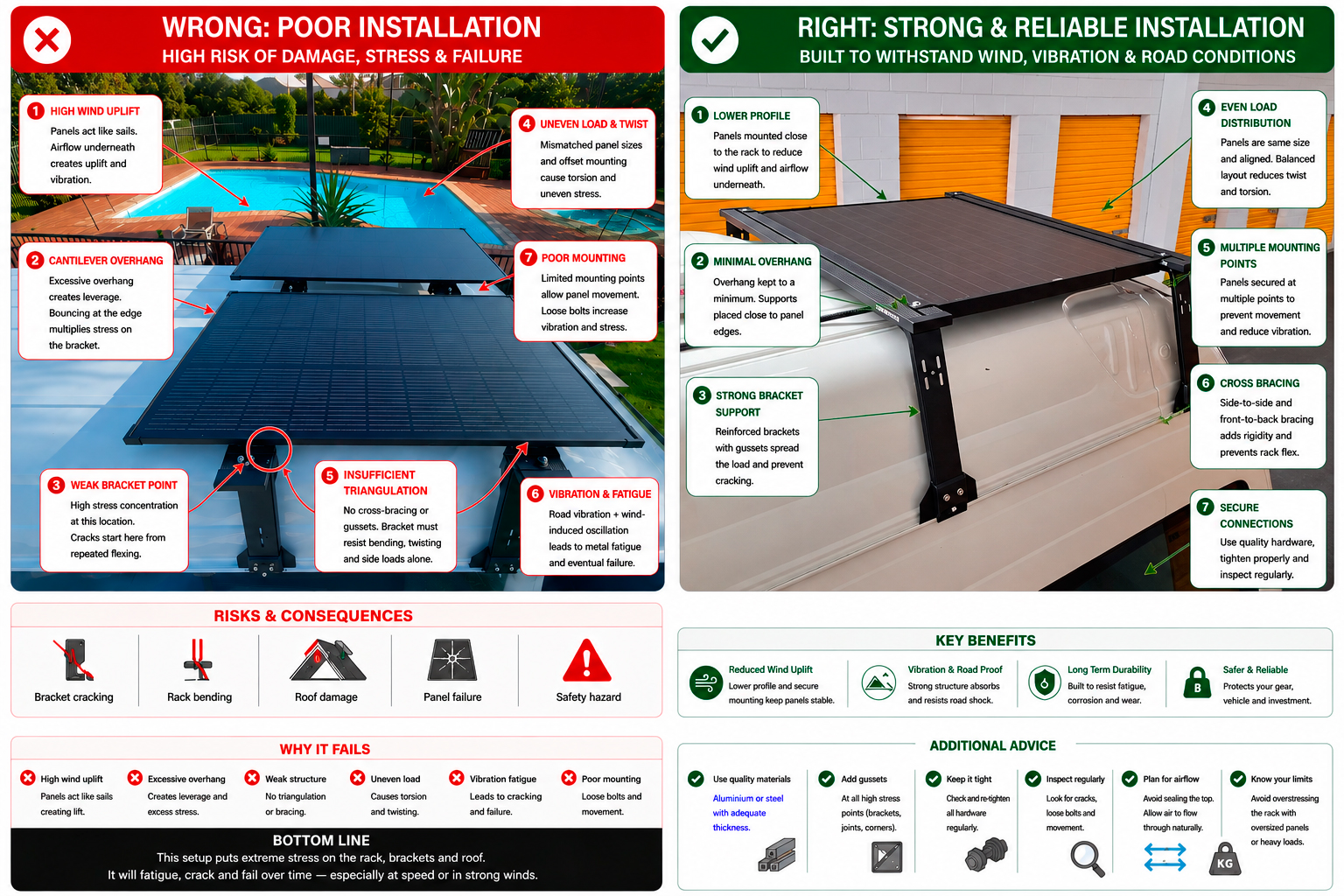
The photo at the left shows a roof-mounted solar panel system installed on a 4x brackets structure, fitted to a van. The configuration includes multiple solar panels mounted above the rack frame with noticeable overhang and elevated spacing that can allow airflow underneath the panels while driving. In this type of setup, aerodynamic uplift, road vibration, torsional twisting, and cantilevered loading can combine to place repeated cyclic stress on the bracket, eventually leading to fatigue failure at the weakest structural point.
Stress points are a high-load hinge or pivot point. With solar panel setups, several forces can multiply the stress on the bracket.
1. Wind uplift from the solar panels
The solar panels sit above the rack and can behave like a wing or sail when driving.
- Air gets underneath the panels
- The panels create uplift and vibration
- The rack twists upward and downward repeatedly
- The force transfers into the angled support brackets
2. Torsional twist from uneven loading
The mix of one large panel, one smaller panel, offset mounting, and overhanging sections can twist the rack unevenly. This can fatigue the bracket over time.
3. Dynamic vibration while driving
Corrugated roads, potholes, freeway vibration, and panel flutter can repeatedly flex the bracket. Steel can survive high static load but still fail from repeated vibration cycles.
4. Cantilever overhang
If the panel extends beyond the main support structure, it acts like a lever. Even a small bounce at the outer edge can create high stress at the bracket connection point.
5. Insufficient triangulation
The diagonal support is resisting vertical load, side load, and twisting at the same time. Without enough gusseting or cross-bracing, the stress concentrates near the corners between bar and brackets.
6. Stress points
Cracks often start at sharp bends, bolt holes, weld toes, or heat-affected areas. These areas are more vulnerable when vibration and wind load are present. Keep an eye on them!
7. Shock loading
A sudden impact or load spike can also start a crack, including:
- Hitting a low tree branch
- Strong wind gusts
- Parking garage contact
- Potholes or rough road impacts
- Off-road body movement
Recommended Improvements
- Add extra support closer to the overhanging panel edge when possible
- Add gussets around the brackets/bars stress point
- Increase the number of brackets when mounting panels
- Definatly lower the panel height to reduce wind getting underneath
- Add side-to-side cross-bracing
- Regularly check for loose bolts or movement
Resume
Incorrect fitting can involve risk, danger, or the potential to cause harm when wind uplift + vibration fatigue + cantilever leverage.
Avoid any element stress on a repeated cyclic bending spot by installing properly. Check when had been subject to stress depending on weather and road conditions.
Improper installation, incorrect fitting, misuse, overloading, or failure to follow recommended mounting procedures may place excessive stress on roof rack components and can lead to structural damage, vibration fatigue, bracket cracking, loosening, or premature failure. Products installed with insufficient support, inadequate bracing, incorrect hardware, excessive panel overhang, poor load distribution, or modifications outside Ozroofracks recommendations are not considered manufacturing defects and are therefore excluded from warranty coverage. It is the responsibility of the installer and vehicle owner to ensure the roof rack system, accessories, and mounted equipment are fitted correctly, regularly inspected, and suitable for the intended application and driving conditions.